Saturday, January 26, 2019

TEAC 451: Blog #3

I really enjoyed the readings for this week! I liked that both were structured in a way that laid out issues within history education currently, why they don't work, and what we can do to fix them. I appreciated that there was educational theories and easy to understand practical examples in both chapters.

I immediately picked up on this quote from Bain: "students of history actively construct the past in their own minds" (p. 332). I was drawn to this because I do believe that history and the past in general are highly based upon our own prejudices and wants and cultural ideas. I think that it is very important to bring this up in social studies classes at an early age. The sooner students understand this, the more likely it is that they will see the subject of history as a study of people, not just to be memorized, but to be understood and interpreted. I was drawn back to this idea while reading Chapter 2 of Levstik and Barton, when they write about "constructive assessments". If each student has a different understanding of a historical event, then why do we test them all the same way? This was actually a question I had while reading Bain, and Levstik and Barton answered it well: we shouldn't. I was so thankful that they then explained how teachers could assess students on a case-by-case basis. I think project and inquiry based learning can be a great way to determine how much students have learned about a subject, rather than critiquing what they DON'T know on a test. I really liked that way of thinking; it put into words a lot of my own feelings on the current grading systems we have in place in a clear and concise way.

Image result for no tests
https://www.maturedrivertuneup.com/more/no-tests-to-pass.html

Saturday, January 19, 2019

TEAC 451: Post #2

When I first began reading the Lee text I had some issues trying to understand what he was talking about. The concept of "doing history," "metahistorical," "second-order," or "disciplinary" knowledge was a bit much for me to wrap my head around in this reading. However, once I was able to connect it to what I already knew, it made sense. In my junior year of high school, when I was just starting the IB program, my history teacher introduced the concept of "historiography" to help us get a sense of what the class would look like. When I was able to make the connection back to that, I felt like I understood what the idea of "doing history" was.

I think this reading was very interesting and engaging. There were a lot of concepts that I agreed with, understood, and felt at some point in my academic career, but had never really thought about or put into words. The injection of adolescent development (in the form of how students think) was a real high point of this chapter for me. The examples of students thinking that people didn't know as much, or weren't as smart, in the past hit home for me because I can remember myself thinking similarly. It makes sense that as you grow up you can have better grasps on these sort of concepts, although I wish the text was more specific on how to help students get over these misconceptions.

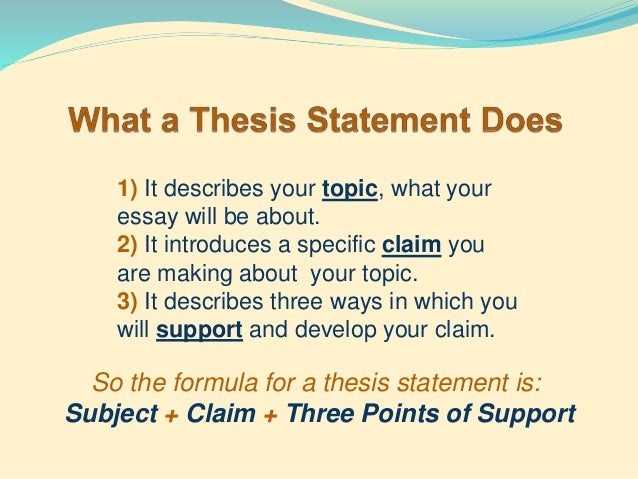
Near the end of the chapter, one specific part confused me. On page 68 there is a paragraph on how teaching a larger scale framework of events and then breaking it down into smaller, more in-depth chunks is useful in teaching history in a way that is more than just facts thrown together. I had to read this section multiple times to get to the core of what Lee was trying to say. Being able to see something as a full picture, then adding specifics to it is often easier than looking at specifics and trying to gain a full perspective. It made me think of how when writing an essay you should state your thesis and then your supporting arguments, not the other way around. I think this method is useful, although perhaps not applicable on a lot of topics. I think that there are some things that should be taught chronologically rather than in groupings; for example, learning US history by moving from topic to topic rather than looking at migration patterns, racial issues, politics, etc. makes more sense to me. However, I think that this would be something useful as an end of the year type of project, maybe.

Image result for thesis statement
https://www.slideshare.net/FaHadHassanNooR/narrowing-thesis-statement 

Saturday, January 12, 2019

TEAC 451: Blog #1

I agree with many parts of the readings for this week. I think that social studies is a great discipline, but often the way it is taught is not engaging, not just in real life, but in examples in the media (just about any children's or teen's TV show has a boring teacher, and they usually teach history or social studies). All three of the articles we read this week reflect what it means to teach social studies authentically and with meaning.

The NCSS Position Statement serves as a benchmark of how social studies can be a great and powerful subject; however, it seems very idealistic. The goal of education, in my opinion, is to make everyone have an equal playing field where each student has similar educational backgrounds and can think critically about most subjects to draw their own conclusions. This article argues much the same perspective, although specifically about social studies education. While this goal is commendable, and many parts of it can be implemented, there are some issues in the feasibility of it on a larger scale. Students should be able to have a meaningful, integrative, value-based, challenging, and active experience in every social studies classroom, but with current emphasis on test scores and quantifying data, it isn't possible for every student to have it. My wish is that eventually we can use the social sciences as a way to teach "critical thinking, problem solving, and cooperative skills", but many are still teaching to the test and expecting students to regurgitate information back to them. 

This issue melds into the concepts in Scheurman's article From Behaviorist to Constructivist Teaching. I personally consider myself to be part of the constructivist point of view, however I can see the usefulness of teaching from a behaviorist perspective. Students must have a baseline knowledge of well-accepted facts on a subject before they can be expected to problem-solve and think critically about it. For example, students should know about Jim Crow laws, segregation, the history of slavery, and their atrocities before they can answer "Why was the Civil Rights Movement of the 1960s necessary?". 

I think that inquiry-based learning can be a great way to tie these things together. Having students discover their own curiosity about a subject and allowing them to dive in and state that desire for knowledge is a wonderful way to stimulate learning. Again, prior knowledge is needed to be able to choose a topic and understand it completely enough to form an opinion on it. 

Perhaps using all the perspectives in Scheurman's article together is the best way to get to the goal of instilling students with the knowledge to make their own decisions about subject-matter, which is a skill that can be applied outside the classroom. 

TEAC 451

I found this article very interesting because I had never before questioned the way in which we teach students throughout the entire history...